Thursday, September 29, 2016

Alexander the Great: Gold Star or Subpar? - Miranda Shepherd

It takes a great leader to accomplish unheard-of things for their nation, and an example of such a leader is Alexander the Great. He is widely known as one of the greatest kings and military commanders of all time for blending cultures and conquering nations in three continents. But is he really deserving of such accolades? His numerous ground-breaking achievements point to yes.
One widespread stance is that yes, Alexander is great. Historically, people in and around his time period, such as Plutarch, looked up to him for his ambition and drive for victory. His known greatness began as a child at age thirteen when he tamed a supposedly untameable horse named Bucephalus. When hearing of his son’s feat, his father reportedly exclaimed, "My son, seek thee out a kingdom equal to thyself; Macedonia has not room for thee," (Philip II). When Alexander’s father was killed in year 336 B.C., Alexander became King of Macedonia at only the age of twenty. From there, the young king would conquer territories of the Persian Empire. This land included what is now Syria, parts of Lebanon and Iran, Egypt, and many more cities and territories. Alexander is famous for never losing a battle, making him one of the most successful and brilliant military leaders in history.
Alexander’s brilliance includes book smarts as well as military knowledge, as he was tutored by the famous philosopher Aristotle, whom Alexander loved very much. “Aristotle he admired at the first, and loved him, as he himself used to say, more than he did his father,” (Plutarch). Alexander was interested and capable of understanding philosophy, and when meeting the philosopher Diogenes, he said, "If I were not Alexander, I should wish to be Diogenes," (Alexander the Great). This shows evidence that although Alexander was aggressive and ambitious in battle, he was not an emotionless tyrant.
Another standpoint is that Alexander was a harsh, reckless leader. Proof to support this belief mainly consists of Alexander’s harsh dealings with civil uprisings and his irresponsibility concerning the governing of his vast empire. Almost immediately after Alexander became King of Macedonia, he tried to suppress the uprising that was occurring in Thebes. However, the Thebans refused to back down, so Alexander used force to stop the uprising. Though destroying the city was harsh, Alexander used it as an example for all the other cities that supported Thebes and did not do anything nearly as harsh to them. This effectively taught the other cities a lesson and prevented further uprisings..
It is a matter of opinion as to whether Alexander the Great was really that great. He conquered more land in a shorter amount of time than any Macedonian king before him, making him great to the Macedonians. However, Alexander was the opposite of great to Persian citizens. He claimed their land and absorbed their cultures. Alexander also kept Persian women captive, supposedly saying once, “that Persian women were torments to the eyes,” (Plutarch). While such treatment was unfortunate and unfair to the Persians at the time, modern European and Asian cultures would likely not be the same varied and interesting ways they are today if Alexander had not conquered so much land. This makes Alexander the Great a wonderful leader regarding the advancement and merging of cultures.
All in all, Alexander had faults like any king, but was overall a great leader in the long-run. He managed to make his nation one of, if not the, most powerful empires in the world during his lifetime. Alexander revolutionized military strategies, pushed his men to master endurance, and taught the world how much a person can accomplish with just 13 years of power.


~~~~~~~~~~~~~~~~~~~~~~~~~~~~~~~~~~~~~~~~


Works Cited


Emmons, Jim Tschen. "Alexander the Great." World History: Ancient and Medieval Eras, ABC-
CLIO, 2016, ancienthistory.abc-clio.com/Search/Display/575648. Accessed 28 Sept. 2016.

"Bucephalus." World History: Ancient and Medieval Eras, ABC-CLIO, 2016, ancienthistory.abc-
     clio.com/Search/Display/586792. Accessed 28 Sept. 2016.

Bialo, Ellen. "Career of Alexander the Great." World History: Ancient and Medieval Eras, ABC-          
     CLIO, 2016, ancienthistory.abc-clio.com/Search/Display/1185181. Accessed 28 Sept. 2016.

"Alexander the Great." World History: Ancient and Medieval Eras, ABC-CLIO, 2016,  
ancienthistory.abc-clio.com/Search/Display/613520. Accessed 28 Sept. 2016.

"Alexander the Great: Quote on Meeting the Philosopher Diogenes." World History: Ancient and     
    Medieval Eras, ABC-CLIO, 2016, ancienthistory.abc-clio.com/Search/Display/654893. Accessed  
28 Sept. 2016.

Plutarch. The Parallel Lives. Vol. VII ed., Public Domain, penelope.uchicago.edu/
    Thayer/E/Roman/Texts/Plutarch/Lives/Alexander*/3.html. Accessed 29 Sept.
    2016.


Alexander the Great

                                                            Alexander the “Great”

        "Some are born great, some achieve greatness, and some have greatness thrust upon them" (Shakespeare). Falling into all, not just one of these categories, was the greatest military leader of all time: Alexander the Great. Alexander was born into a family of wealth and power destining him to become "great." However, instead of just relying on his own family’s reputation, he sought his own. Alexander "achieved greatness" by conquering an empire and remaining undefeated, making him one of the greatest rulers the ancient world had ever had.

            Alexander, being born into a family of aristocracy and opulence, learned from a young age what was expected of him. He was bred to be a sovereign, and taught how to fight, control, and conquer. At the age of eight, he was given a horse to tame that none other was able to. Alexander, of course, successfully accomplished this, giving his father such confidence in his future, he said, “You’ll have to find another kingdom; Macedonia isn't going to be big enough for you” (Bowman). Alexander’s father also tried to encourage this future by putting him under the tutelage of Aristotle, one of the greatest philosophers (Sacks). Aristotle taught him a vast amount, and much of how Alexander handled “diplomatic skills and difficult political problems” (Marks) was due to his influence.

After Alexander’s childhood, while he was readily prepared for greatness, he was “thrust into it.” Having no choice, Alexander immediately became ruler in 336 BCE once his father was assasinated. Ruling until 10 June 323 BCE, he cemented himself as one of the greatest military commanders (Mark). During this time, he conquered almost all of the know world of his day. However, his most impressive feat was never 
once losing a battle, throughout all twelve years.

Throughout the ages, legends of Alexander the Great have been passed down and are compelling enough to be told over and over. These stories have originated from all around and have only one thing in common.  All of these stories share a depiction of Alexander as an extremely powerful figure. Some show him as god or magical character such as a legend that believes, “He stopped there early in his eastward campaign. The sacred spring there had dried up after the Persians looted and desecrated the temple in 494 B.C.E. But when Alexander arrived to honor to Apollo the spring suddenly began to flow again” (Dell). While others demonize him like Arabs and Zoroastrians that thought he was a tyrant or a Iskander, type of boogeyman (Dell).While, none of this is factual most legends come from a foundation of truth, showing Alexander was truly one of the most strong leaders to exist.

               The public opinion of Alexander has varied somewhat, but most believe he deserves his  title of “The Great.” Extremely famous historical leaders, such as, Plutarch, Napoleon, and Julius Caesar look up to him as an ideal figure (Emmons). Plutarch idolized Alexander most likely because he valued Alexander’s control, and this is apparent when Plutarch wrote, “But Alexander, as it would seem, considering the mastery of himself a more kingly thing than the conquest of his enemies…” (Plutarch). However, Napoleon and Caesar looked up to him for a different reason: Alexander’s military expertise (Emmons). This is because they were both heavily involved military leaders and Alexander’s military tactics were genius (Deea).

Over two-thousand years ago Alexander The Great cemented himself as one of the best rulers through ancient and modern times (Waldman). He remains as compelling to learn about with his contradictory personality and indisputable fighting ingenuity. Legends of this exist all over and while he doesn't deserve the godly proportions many create, he does deserve one thing. Alexander the Great deserves his title of “The Great,” and the glory that goes along.


                                                           Works Cited

Bowman, John S. “Alexander the Great and the Hellenistic World.” Exploration in the World of the 

        Ancients, Chelsea House, 2004, Ancient and Medieval History Online,   

        http://online.infobase.com/hrc/search/details/396825?q=alexander the great.

Deea. "A Political Comparison of Napoleon Bonaparte and Julius Caesar." Scribd. N.p., n.d. Web. 28  

        Sept. 2016. 

Dell, Pamela, and Debra l Skelton. “Legacy of Alexander the Great.” Empire of Alexander the Great, 

        Revised Edition, Chelsea House, 2009, Ancient and Medieval History Online, http://

 online.infobase.com/hrc/search/details/397267?q=alexander the great.

Emmons, Jim Tschen. "Alexander the Great." World History: Ancient and Medieval Eras, ABC-  


         CLIO, 2016, ancienthistory.abc-clio.com/Search/Display/575648. Accessed 19 Sept. 2016.

Mark, Joshua J. "Alexander the Great." Ancient History Encyclopedia. Ancient History 
         
         Encyclopedia, 2013. Web. 28 Sept. 2016. 

Plutarch. "P225 The Life of Alexander (Part 1 Of 7)." Plutarch • Life of Alexander (Part 1 Of 7). 

          N.p., n.d. Web. 28 Sept. 2016. 

Reynolds, Clark G. "Alexander the Great." Great Lives from History: The Ancient World, Prehistory-

         476 c.e.. Ed. Christina A. Salowey. Hackensack: Salem, 2004. n. pag. Salem Online. Web. 22   

         Sep. 2016. <http://online.salempress.com>.

Sacks, David. “Alexander the Great.” Encyclopedia of the Ancient Greek World, Third Edition, Facts 

         On File, 2015, Ancient and Medieval History Online, http://online.infobase.com/hrc/search/  
        details/224479?q=alexander the great.

Waldman, Carl, and Alan Wexler. “Alexander the Great, Route Of.” Encyclopedia of Exploration, 

          Vol. 1, Facts On File, 2004, Ancient and Medieval History Online, 
     
          http://online.infobase.com/hrc/search/details/213022?q=alexander the great.


Alexander the Okay

Alexander the great conquered a great amount of land during his time. Some of the land he conquered included rivers such as the Nile and Indus. These rivers were great for trade allowing his people to prosper. It is true that he did great things for his own people however, the way he did it was unjustified. But, many would argue that he was great because of the good that he did for his people. These are the people who are willing to overlook the unnecessary lives took by Alexander.

Plutarch was a greek philosopher who is the author of The Parallel Lives. Plutarch mentions, in his writing, a story about a woman violated by a Thracian. “Alexander bade her depart in freedom with her children”(The Parallel Lives). Plutarch shares this story showing Alexander’s treatment of women. However, Alexander did not stop for anyone. “The Macedonians stormed the city, killing everyone in sight, women and children included”(History of Macedonia). A leader who feels the need to kill women and children to win a battle should not be considered great.
Bucephalus
Alexander had a very bold personality. He was daring and did not back down from fear. Alexander went with his father to try a horse named Bucephalus. This stallion did not allow any of Philip’s men to ride him. Alexander stepped up and was able to calm the stallion, who became Alexander’s horse. But, sometimes Alexander kept going when he should have backed down. He pushed his soldiers until they were forced to convince him to turn back. A truly “great” leader knows when it is time to rest.
Since Alexander was the son of King Philip II, he had people already respecting him and thinking that he could do great things. When Alexander was only 14, a man named Isocrates wrote a letter to him, “I hear from all that you are a lover of your kind, a lover of Athens, and a lover of wisdom; not pursuing an idle and foolish, but a prudent and intelligent course:”(A Letter to the Young Alexander). From the time he was born, he was set up to be great. Even during and after his time he still had many people such as Plutarch believing he deserved the name, Alexander the Great.

One could argue that his violence was because he had a goal and he wanted to reach it soon so, he had to make harsh decisions. Others argue that he could have used all of the knowledge that he was given to find a better solution. It is clear by his name that he had many important people on his side. But, that does not mean that he was great. If a person looks at the big picture, yes, he was overly impulsive. Or was Alexander simply a child who was given power at an age when he was too young to know handle it?


Works Cited
"Alexander the Great." ABC-Clio,
ancienthistory.abc-clio.com/Search/Display/575648?terms=alexander%20the%20great&webSiteCode=SLN_HANC&returnToPage=%2fSearch%2fDisplay%2f575648%3fterms%3dalexander+the+great&sType=quick&token=4E96D8A2A29F2C873EE567B431F0D159&casError=False.
"ALexander the Great." History of Macedonia,
www.historyofmacedonia.org/AncientMacedonia/AlexandertheGreat.html.
Alexander the Great. History of Macedonia,
www.historyofmacedonia.org/AncientMacedonia/AlexandertheGreat.html.
"Alexandria." Facts on File, online.infobase.com/HRC/Search/Details/237563?q=Alexandria.
"Bucephalus." www.ancient.eu/Bucephalus/.
"Isocrates: Letter to Young Alexander the Great." ABC-CLIO eBook Collection,
ancienthistory.abc-clio.com/Search/Display/1813279.
The Parallel Lives. Vol. 7,
penelope.uchicago.edu/Thayer/E/Roman/Texts/Plutarch/Lives/Alexander*/3.html.
Savill, Agnes. "Character of Alexander." Alexander the Great and His Time.

Alexander The Not So Great


Ruby Claire Jones
Alexander the great was not great, after he died his empire went downhill. This shows he was not a great leader, because he did not govern his empire properly. He also did many things to build his power that were wrong, like killing people that wronged him including some of his friends to get revenge. Alexander also destroyed many important places that were important to many cultures. Alexander the Great was indeed not great, because his actions were not.

One of the reasons Alexander was not great was because he didn't take time to govern his empire. After he conquered one area of land he left his generals to keep it going. When Alexander was going through India his soldiers stopped and made him go back. After Alexander the Great died he divided his empire up to be ruled by his generals. Eventually the empire crashed and Alexander's empire was gone."The latter raid left the city badly damaged... 90% of Alexandria was in a state of ruins" (ABC Clio, Alexandria
Alexander the Great was thought of as great at his time and in later times, his war tactics might have been good but he wasn't. His empire definitely was not great. He was never known for his governing skills, he was known for his war tactics.

      Alexander the Great did not have any mercy, he killed many friends and enemies to get his power. On one occasion he was trying to kill his Persian rival King Darius III, but Arrian of Nicomedia got to him first. Alexander was furious, he then hunted him down and murdered him. Before King Darius died he sent Alexander letters hoping for peace between them. "Darius twice sent Alexander a letter of friendship, the second time offering a large ransom for his family, cession of all the Achaemenid Empire west of the Euphrates River, and the hand of his daughter in return for an alliance. Alexander rejected both letters and marched into Mesopotamia." (Britannica, King Darius III) This shows Alexander did kill many people for revenge, and also that he wanted everything to be done by him. Alexander could not rule a country without the help of others. Alexander the Great also personally killed Cleitus. He did have a strong army, but he could have had a stronger character and not killed all of those people just to get his way. History does agree with Alexander being rough on his enemies or rivals, and even friends. Alexander was not great and should have not done this to make his country bigger.

On some occasions Alexander the Great would destroy important landmarks to religions and cultures. He destroyed the ancient city of Persepolis, which many people were upset with. People were mad at Alexander for destroying an important city to their culture. Alexander also destroyed prominent statues of religious figures to show he was better and more powerful than they were. Alexander also got rid of some parts of other cultures to make his own, Hellenistic culture. It was very wrong of Alexander to destroy places that were important to the history of the world for his own benefit. He thought to highly of himself by making hi culture more important than others. "Persians also condemn him for the widespread destruction he is thought to have encouraged to cultural and religious sites throughout the empire." (BBC, Alexander the not so great: History Through Persian Eyes
History disagreed with this because peoples' homes and cultures were destroyed, and those religious figures were very upset with him. Alexander the not great was not doing the right thing by destroying ancient cities and important structures to other cultures.

There are many ways to prove Alexander deserved his title of being great, but the ones that prove he was not great are stronger. If Alexander was great he would have known it was wrong to do the things he did. Especially if he was drunk and furious all the time, maybe if he lived longer he would be different, but he did not so in my opinion he is not great. Alexander could have been great if his character was better and he cared more about his impact on the world.

Work Cited

Emmons, Jim Tschen. "Alexander the Great." World History: Ancient and Medieval Eras,
ABC-CLIO, 2016, ancienthistory.abc-clio.com/Search/Display/575648. Accessed 28 Sept. 2016.
Plutarch. "P225 The Life of Alexander (Part 1 Of 7)." Plutarch • Life of Alexander (Part 1
Of 7) 1 Web. 28 Sept. 2016.
Ansari, Prof Ali. "Alexander the Not so Great: History through Persian Eyes."BBC News.
N.p., n.d. Web. 28 Sept. 2016.
Garbini, Giovanni. The Ancient World. New York: McGraw-Hill, 1966. Print.


Fritze, Ronald. "Alexandria." World History: Ancient and Medieval ErasABC-CLIO, 2016,                 ancienthistory.abc-clio.com/Search/Display/586002. Accessed 29 Sept. 2016.
"Darius III." Encyclopedia Britannica Online. Encyclopedia Britannica, n.d. Web. 29 Sept.     
          2016.

The Alexander Mosiac. Wikipedia, en.wikipedia.org/wiki/Alexander_the_Great. Accessed 28


Sept. 2016.

Thomas, Carol G. Alexander the Great in His World. Malden, MA: BLACKWELL Pub.,
2007. Print.

Alexander the Terrible, Horrible, No Good, Very Bad Leader

Statue of Alexander
Laura Kate Evans

Although most sources represent Alexander the Great exactly as his name does, he was actually not all that he is made out to be. Alexander acquired his name from his powerful military conquests, yet there is little discussion on his inability to develop a successful empire. With only having concern of himself and his social stature, Alexander was inadequate in doing what was best for Macedonia and uninterested in developing the civilization into anything more than a barbaric realm only interested in destroying other societies. Alexander the Great is now generally perceived as an influential leader whose military strategies still pertain to those of today, although opinions on his empire tend to vary. During Alexander's time, he was considered temperamental and arrogant by many, although later views of him progressed into exaggerated respect. Overall, Alexander was a mediocre leader whose legacy was distorted into a much greater deal than it actually was.
While Alexander was extremely successful in conquering other civilizations, he was not a well-balanced leader. Alexander destroyed many surrounding territories of Macedonia, absent minded of progressing his empire into an intellectually developed society. Although military knowledge is important in leading an empire, and many leaders today still use Alexander's tactics, military is not all the makes up a society. Alexander was also too affected by personal events, and often acted upon aggressive impulse rather than being thoughtful. In 328 B.C.E., Alexander drunkenly argued with his close friend, Cleitus, and ended up stabbing him with a spear (Facts on File, Rage and Murder). Following the incident, Alexander thankfully regrets stabbing Cleitus, but his guilt does not correct his mistake. If Alexander's impulse and aggression had been translated into how he ran his empire, there would have been absolute havoc. Alexander once addressed Macedonia with a speech he referred to as "To This Empire There Will Be No Boundaries", and in it he is quite literal in showing no boundaries. Alexander arrogantly proclaimed, "With all that accomplished, why do you hesitate to extend the power of Macedon—your power—to the Hyphasis and the tribes on the other side? Are you afraid that a few natives who may still be left will offer opposition?" (Alexander the Great, To This Empire There Will Be No Boundaries). This egotistical statement offers a great insight into Alexander's personality, as he clearly shows that his lack of limitations in annihilating anything that gets in his way.

Alexander Goes to Battle Against Darius III
People view Alexander in various ways today. It is said that while Alexander is most remembered for his greatness, some of his tactics today would be considered terrorism. According to Frank W. Walbank, “He was swift in anger… Ruthless and self-willed, he had increasing recourse to terror, showing no hesitation in eliminating men whom he had ceased to trust, either with or without the pretense of a fair trial” (Frank W. Walbank, Alexander the Great). Walbank states that Alexander was a temperamental leader, with inconsistency in judgement due to personal issues, which can be inferred as negative qualities to his leadership position. Though it is true that Alexander was successful in conquering other civilizations, Walbank continues to argue that Alexander was not interested in doing so for the benefit of Macedonia, but rather for his own ego. Others claim that Alexander was indeed magnificent, based on the idea that many other accomplished leaders, including Julius Caesar, were influenced by his military characteristics (Jim Emmons, Alexander the Great). In general, modern day point of views on Alexander differ based off opinion.

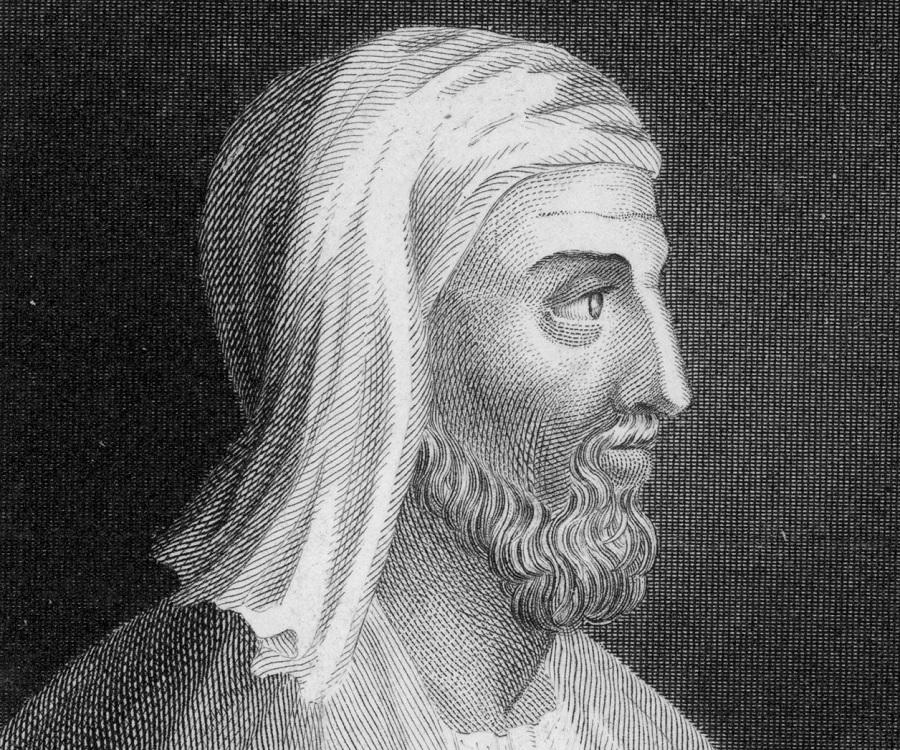
Image of Plutarch, Creator of The Parallel Lives
Like in today's time, the perspective on Alexander in ancient times varied. According to Plutarch, “The outward appearance of Alexander is best represented by the statues of him which Lysippus made, and it was by this artist alone that Alexander himself thought it fit that he should be modelled” (Plutarch, The Parallel Lives, Part 1). Plutarch continues to discuss the most appealing virtues of Alexander, explaining that his charisma, looks, and romantics were some of his best qualities. These characteristics boded well for Alexander's leadership, and he was able to be extremely successful because of this. However, not everyone was wooed by Alexander's charm. During one of Alexander's conquests in 330 B.C.E., he met an Amazonian woman by the name of Thalestris (Adrienne Mayor, When Alexander Met Thalestris). According to Mayor, Amazonian women were much more independent and liberated than those living in the Hellenistic culture, and Thalestris took it upon herself to approach Alexander about trying to have his baby. Alexander was casual about the situation, and spent many nights with Thalestris, even offering that she join his cavalry. While this would seem like a casual gesture to modern day witnesses, including women in military was very much frowned upon in Alexander's time. Although it is not said that anyone objected Alexander's offer, Mayor believes that this incident would have been one that the ancient people would not have respected nor appreciated. Thalestris rejected the offer, but had she accepted, it can be inferred that the ancient people would have protested Alexander's decision immediately (Adrienne Mayor).

Many people assume Alexander's greatness simply because of his name. However, Alexander was not interested in the overall success of his empire, but more concerned with military instead. Prehistoric and modern opinions on Alexander vary, as some people appreciate Alexander's strategies more than others. Although military strength is significant in any empire, it is not the only aspect a society can thrive on. In order for a civilization to be great, it has to incorporate the aspects of intellect, politics, government, education, philosophy, military, and social structure. While Macedonia was successful in some of these virtues, the realm was much more focused on violence. Though the common belief is that Alexander the Great was great, this is just due to the exaggeration of his endowment. Alexander was indeed effective with his military strategies and ruthless disposition, but he was overall an average leader whose mediocrity hampered the Macedonian empire.


Works Cited
Alexander Fighting Persian King Darius III. Wikipedia, Wikimedia Foundation, en.wikipedia.org/wiki/Wars_of_Alexander_the_Great. JPEG. Accessed 27 Sept. 2016.
Emmons, Jim Tschen. “Alexander the Great.” World History: Ancient and Medieval Eras, ABC-CLIO, 2016, ancienthistory.abc-clio.com/Search/Display/575648. Accessed 21 Sept. 2016.
“The Empire at Its Largest.” Great Empires of the Past Online. Infobase Publishing. Web. 23 Sept. 2016. <http://online.factsonfile.com/RecURL.aspx?did=63269>.
Foy, Shelley. Alexander the Great. 19 May 2016. The Deepest Red, WordPress, thedeepestred.wordpress.com/alexander-the-great/. JPEG. Accessed 22 Sept. 2016.
Liebert, Hugh. “Alexander the Great and the History of Globalization.” The Review of Politics vol. 73 no. 4 (2011): 533-60. Web. 21 Sept. 2016.
Mayor, Adrienne. “When Alexander Met Thalestris.” History Today, vol. 65, no. 1, Jan. 2015. History Today, www.historytoday.com/adrienne-mayor/when-alexander-met-thalestris. Accessed 23 Sept. 2016.
Plutarch. The Famous People, Famous People, www.thefamouspeople.com/profiles/plutarch-208.php. JPEG. Accessed 27 Sept. 2016.
Plutarch. The Parallel Lives by Plutarch. 1919. Penelope, U of Chicago, penelope.uchicago.edu/Thayer/E/Roman/Texts/Plutarch/Lives/Alexander*/3.html. Accessed 19 Sept. 2016.
Reynolds, Clark G. “Alexander the Great.” Great Lives from History: The Ancient World, Prehistory-476 c.e. Ed. Christina A. Salowey.  Hackensack: Salem, 2004. n. pag. Salem Online. Web. 19 Sep. 2016. <http://online.salempress.com>.
Robinson, Charles Alexander, Jr. Alexander the Great. 2nd ed., Toronto, Macmillan Company, 1967.
“”To This Empire There Will Be No Boundaries“.” Ancient and Medieval History Online. Facts On File. Web. 22 Sept. 2016.
Walbank, Frank W. “Alexander the Great.” Britannica School. Encyclopedia Britannica, Inc., 7 Apr.  2015. <http://school.eb.com/levels/high/article/106078>. Web. 19 Sep. 2016.

Woodcock, George. “Legendary Alexander.” History Today, vol. 20, no. 11, Nov. 1970. History Today, www.historytoday.com/george-woodcock/legendary-alexander. Accessed 21 Sept. 2016.